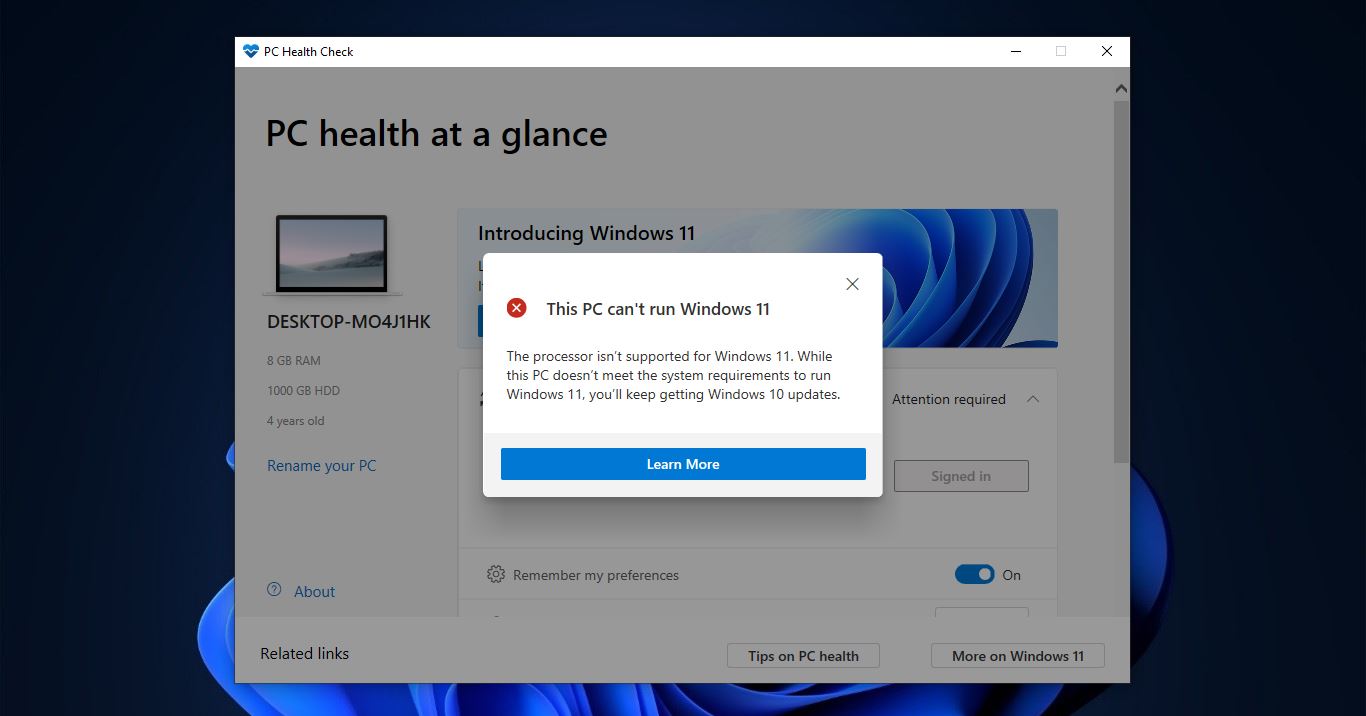
Microsoft is officially released the new generation Operating System Windows 11. Many users awaited to Install or upgrade their PC after the release of Windows 11. But Microsoft set a checkpoint at the event, Microsoft states that the Windows 11 upgradation is free for Windows 10 users, if the following Minimum System Requirements are met. And also Microsoft releases a tool called the PC Health Checkup tool to check the eligibility of your system. Most of the users downloaded and tried the PC Health Checkup tool, after installing most of the users discovered that their hardware isn’t compatible with upgrading their PC to Windows 11. Let’s see the minimum System Requirements in detail first.
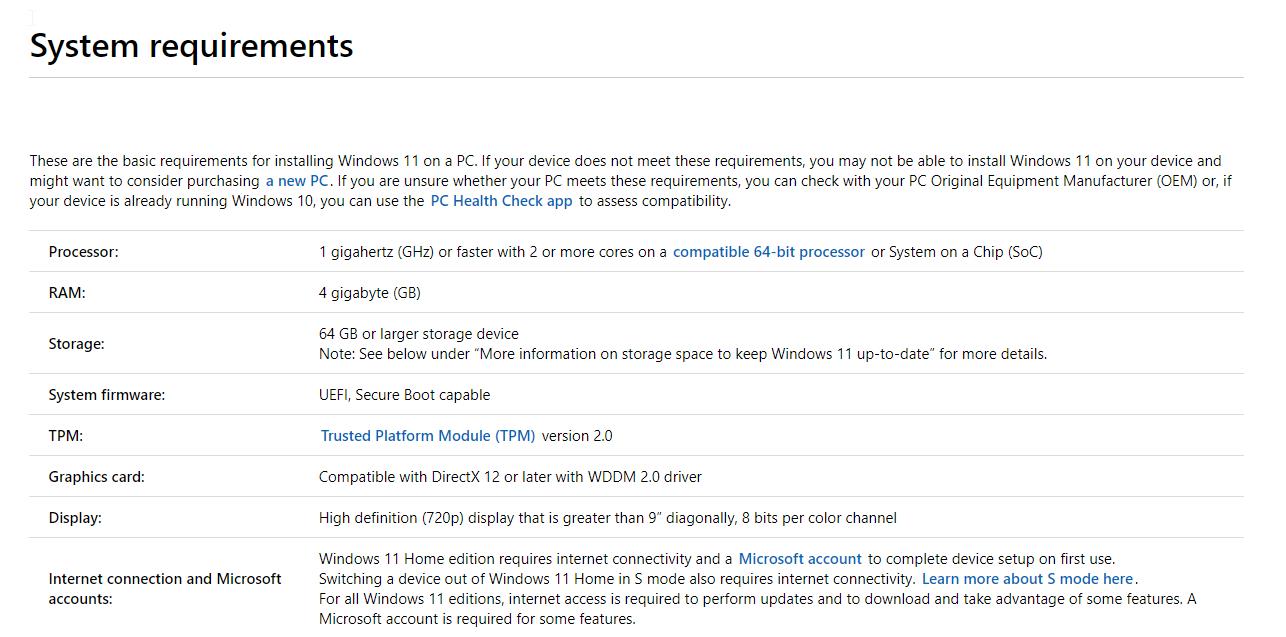
As per the revised Minimum system requirements for installing Windows 11 on a PC, we can omit the RAM, Storage, Graphics card and Display, because most of the system passes these checks. We can consider the TPM, System firmware, and Processor.
Related: Microsoft Says That you can Install Windows 11 on Unsupported devices
TPM: As per Microsoft, the TPM (Trusted Platform Module) Should be installed on your motherboard and the version should be 2.0, Almost every CPU in the last 5-7 years has a TPM. But you need to check the version of your TPM, click here to know more about TPM and how to check the version. We can Upgrade and enable the TPM easily.
System Firmware: Your system boot mode should be set to UEFI and Secure boot should be enabled. We have already seen how to check these settings.
Processor: From yesterday most of the users think if we check the above two requirements then we can easily proceed with the upgradation. But Microsoft announced recently it has changed the requirements of the Processor.
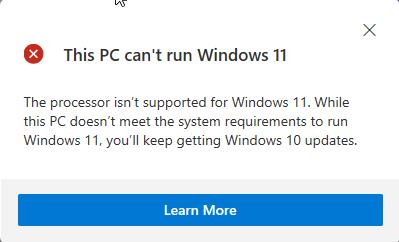
The PC Health Checkup tool got updated and now if you check the eligibility of your system using this tool. You’ll get a detailed error message with some clue as, why your computer isn’t compatible with windows 11 Upgradation. The old version of the PC Health checkup tool doesn’t show necessary error information, it will directly show “This PC can’t run Windows 11”. Now with the new update, this issue was shorted out. If you already installed the PC Health Checkup tool, it should auto-update when you open the tool.
Even though you fulfill all the Minimum system requirements, like boot mode and the TPM, still most of the users are facing the hardware isn’t compatible error from the PC Health Checkup tool (Your Processor isn’t support for Windows 11). Because Microsoft has altered its minimum hardware requirements, and the most surprising thing is the CPU changes. Microsoft announces that Windows 11 will officially support 8th Gen and newer Intel core processors, alongside Apollo Lake and newer Pentium and Celeron Processors.
The Processor isn’t support for Windows 11:
This rules out millions of existing Windows 10 devices from upgrading to Windows 11 with full support. Find the full list of supported processors on Microsoft Docs site. This site includes a full list of supported Windows 11 CPUs from AMD, Intel, and Qualcomm. These specs should only applicable for PC manufactures, but apparently, that’s the hard floor that Windows 11 will use for upgraders as well.
WINDOWS 11 SUPPORT FOR INTEL
- Intel 8th Gen (Coffee Lake)
- Intel 9th Gen (Coffee Lake Refresh)
- Intel 10th Gen (Comet Lake)
- Intel 10th Gen (Ice Lake)
- Intel 11th Gen (Rocket Lake)
- Intel 11th Gen (Tiger Lake)
- Intel Xeon Skylake-SP
- Intel Xeon Cascade Lake-SP
- Intel Xeon Cooper Lake-SP
- Intel Xeon Ice Lake-SP
WINDOWS 11 SUPPORT FOR AMD
- AMD Ryzen 2000
- AMD Ryzen 3000
- AMD Ryzen 4000
- AMD Ryzen 5000
- AMD Ryzen Threadripper 2000
- AMD Ryzen Threadripper 3000
- AMD Ryzen Threadripper Pro 3000
- AMD EPYC 2nd Gen
- AMD EPYC 3rd Gen
If your PC doesn’t have these configurations then don’t count on upgrading to Windows 11.